
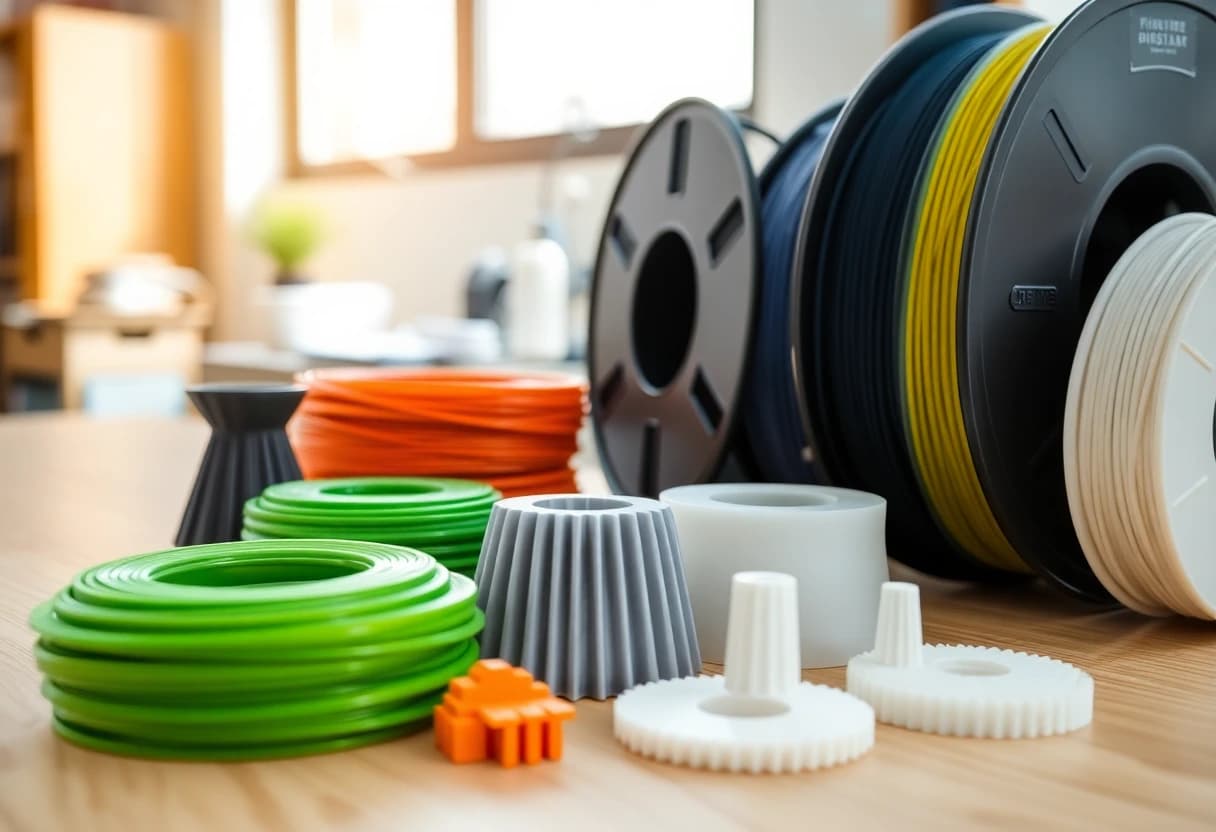
PLA
The straightforward choice for detailed, rigid indoor parts.
- Prototypes and display models
- Decor and housings
- Fine details under moderate load
Materials
We print in PLA, PETG, TPU 95A, PLA-CF and PETG-CF. This guide helps match the material to its intended use.
Base materials
The intended use matters most. If in doubt, we review your selection before production.
PLA
The straightforward choice for detailed, rigid indoor parts.
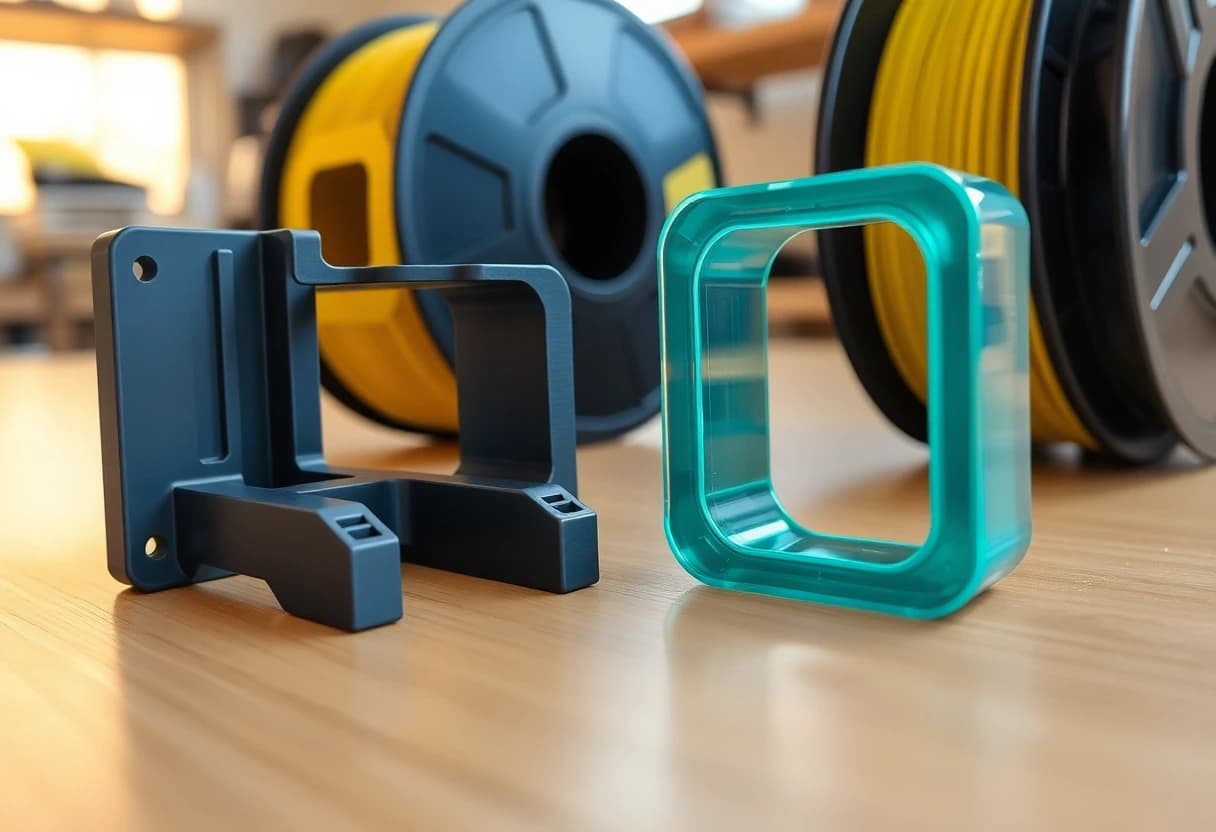
PETG
The tougher choice for functional parts, moisture and higher loads.
PLA is usually more matte and detailed; PETG looks smoother and more technical.
PETG is generally the better choice for consistently warm environments.
PETG handles moisture better; color and geometry also affect durability.
| Property | PLA | PETG |
|---|---|---|
| Beginner-friendly | Very easy | A bit trickier |
| Strength | Stiff, rather brittle | Tough and impact-resistant |
| Temperature | Low (approx. 60 °C) | Higher (approx. 80 °C) |
| Water & weather | Moderate | Good, also outdoors |
| Flexibility | Rigid | Slightly flexible |
| Best for | Decor, models, prototypes | Functional parts, outdoor, containers |
Pros
Cons
Pros
Cons
Specialty filaments
TPU 95A can be ordered in black, white and neon green; PLA-CF and PETG-CF in black and white. Each solves a different task and does not replace an engineering review.
Elastic and damping for parts designed to bend in a controlled way or absorb impacts.
Pros
Cons
Rigid and dimensionally stable with a matte surface for precise parts and a refined technical appearance.
Pros
Cons
Rigid while handling moisture and impacts more robustly than PLA-CF.
Pros
Cons
FAQ
PLA is usually the easy starting point for models, prototypes and indoor parts. PETG often fits moisture, impacts and moderately higher temperatures better.
For short periods, yes. For lasting moisture, UV and changing temperatures, PETG is usually preferable. Geometry and use still matter.
Yes. Before production we review the file, dimensions and configuration for obvious risks and contact you if anything is unclear.
CF means carbon fibre. Short carbon fibres mainly increase rigidity and change the surface. Load capacity still depends strongly on geometry and layer orientation.
No. It is usually stiffer and more dimensionally stable, but can be less forgiving depending on the load. PETG, PETG-CF or TPU may be better for impacts, snap fits or bending.
TPU 95A is available in black, white and neon green. PLA-CF and PETG-CF are available in black and white.
Upload your model and choose material, color and quality in the configurator.